I redesigned the gallery 1740 themed in “Arts of Ancient China: From the Neolithic to Bronze Age” at Harvard Art Museums. The old gallery, in my opinion, is inaccessible both physically and cognitively in several ways:
- Too many objects (166 pieces in total) crowding in one small gallery, taking up all four sides of the complete walls could be overwhelming;
- Outdated display style with objects categorized by time period and material into large glass boxes impeding people’s close looking and authentic sensation of the objects;
- Labels and objects could never match directly and locate easily;
- Long texts with tiny fonts filling with specific cultural/historical concepts and jargons could be inaccessible to people from other cultures;
- None of the written information is in Chinese, where these objects come from, losing the poetic and cultural connection that could have been brought by the Chinese language, and could also be inaccessible to Chinese audience to the gallery;
- The story-telling of the objects is confusing: the thematic gallery introduction is squeezing between a bench and a large object at the very end of the gallery-no way could be located when first enter the gallery; the wall label of thematic sequence about “jade arts” is at the end of a chronological sequence, which could cause cognitive confusion;
- Labels of the objects are set either at the waist level or at the floor level (could not think of why!!), make it physically inconvenient or even impossible for visitors with physical difficulties to reach and read;
- The gallery is small and a bit dark with everything in glass boxes crowding next to each other either vertically or horizontally, could not present well the beauty of the projects, and could make people feel so boring to drive their attentions away.
I want to turn it into a kind of fun, crazy, comfortable, accessible, but still spontaneously educational experience.
Click to see the video illustration of this space:
Click to see the VR view of this space:
http://panorama.enscape3d.com/view/0g0tfosi
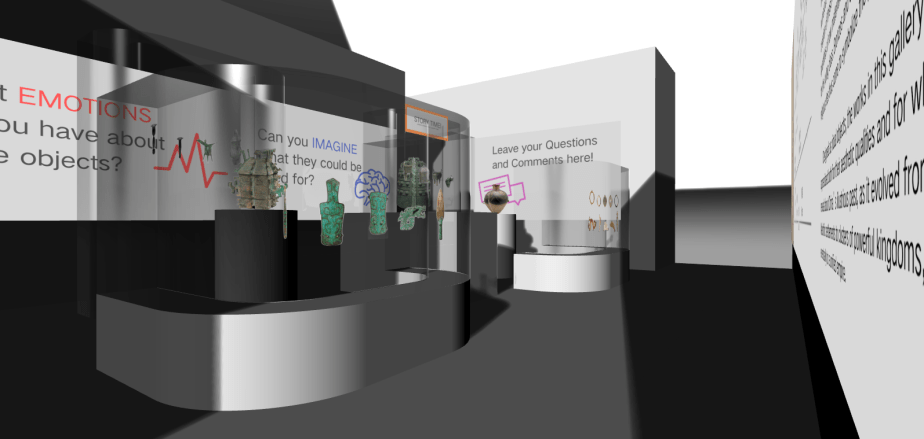
I specially organized the spatial design in the pattern of an ancient Chinese motif– the taotie face, thus the visitors’ journey through the gallery would be a surprising embodied experience of the face. Meanwhile, visitors could experience and learn through their body movements in the gallery: turning left and right, seeing and unseeing each other, reaching up and down….Even if visitors do not take much time with the objects, the body experience would also be an impressive memory for them to learn.
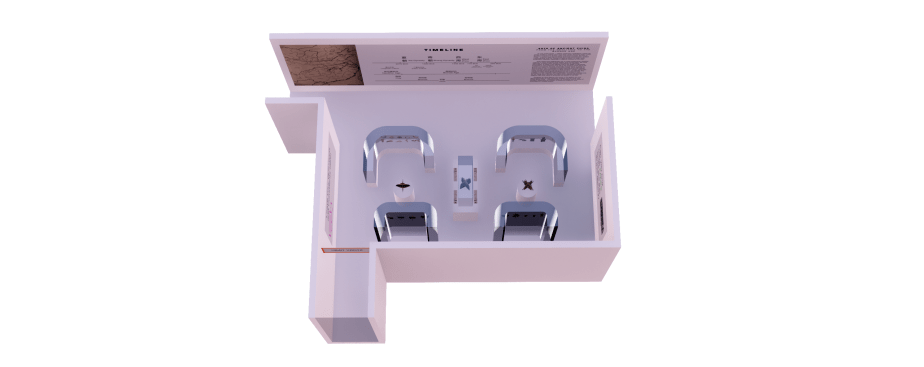
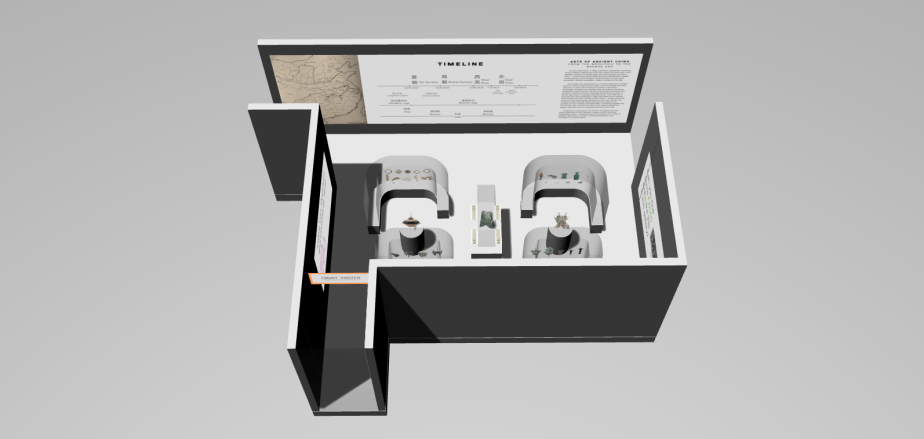
By entering the gallery, visitors could first take a look at the timeline and the interactive map illustrated in both Chinese and English language, to get a basic understanding on the gallery’s relevant cultural, historical, and materialistic contexts. This would be especially helpful for visitors from other cultures or countries.
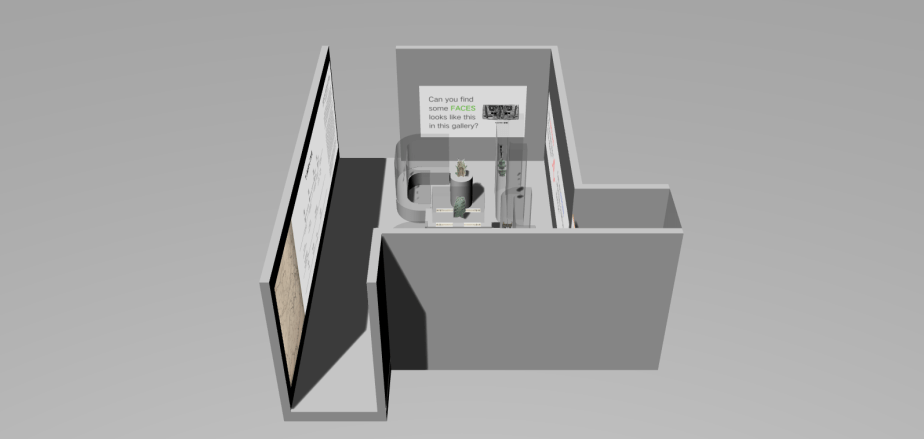
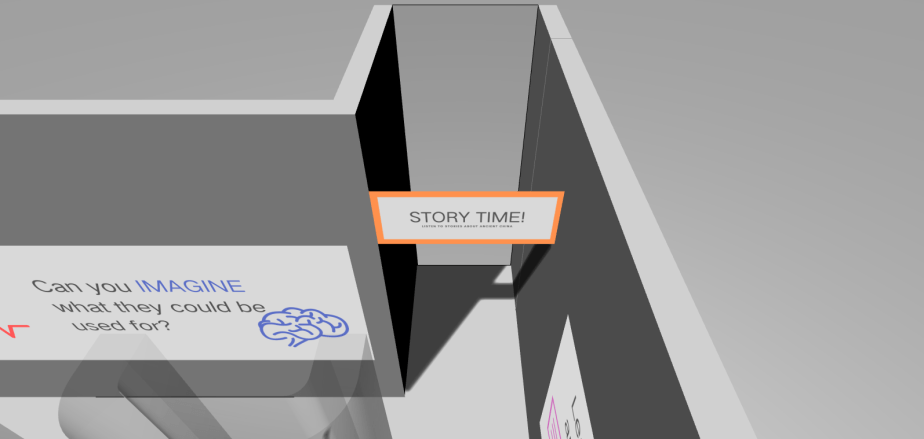
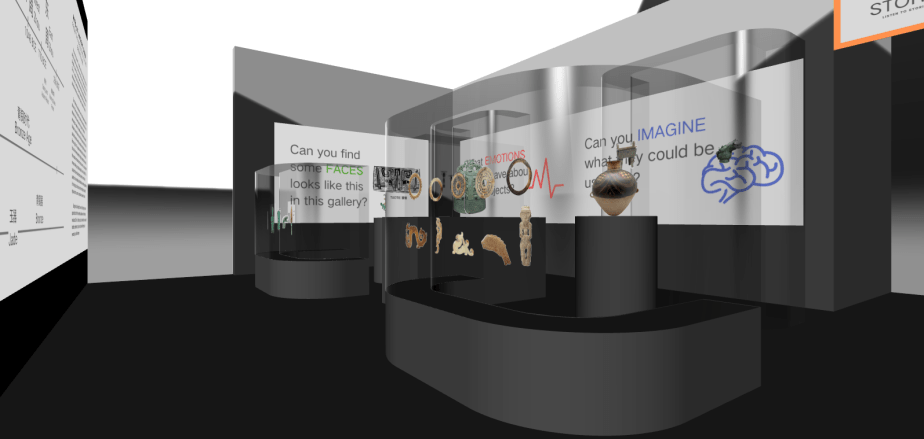
When exploring the gallery, visitors would encounter fun thematic question labels instead of those long and boring information labels on the walls, they would be asked to find the faces from the objects in this gallery, to notice their emotions, and to imagine the function of these ancient objects. The goal is to inspire people’s inquiry looking into the objects themselves, but not be overwhelmed by dense historical information. The questions will lead the visitors to re-look, re-examine, and re-flect about the objects on view, both of the details and of the deeper cultural meanings. Visitors can make their own meanings as they wish in this process, but these meanings will be elicited from the questions and based on the objects thus would not drift away too much. The questions would also help visitors develop a habit/the ability of close-looking and critical thinking in art museums. In this process, they will refine their senses and reclaim their agencies about art. Meanwhile the objects would also be viewed and experienced from the perspective of art instead of historical artifacts. For visitors who would love to further investigate about the historical information behind the objects, they could find them on the gallery booklets or museum’s website.
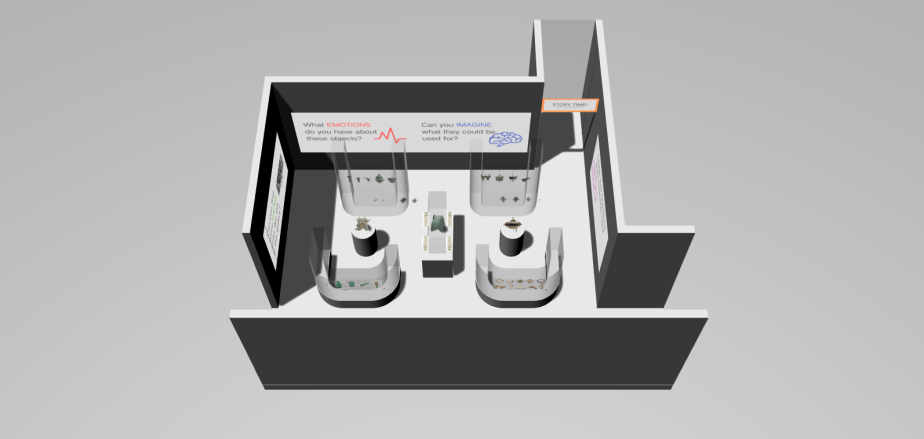
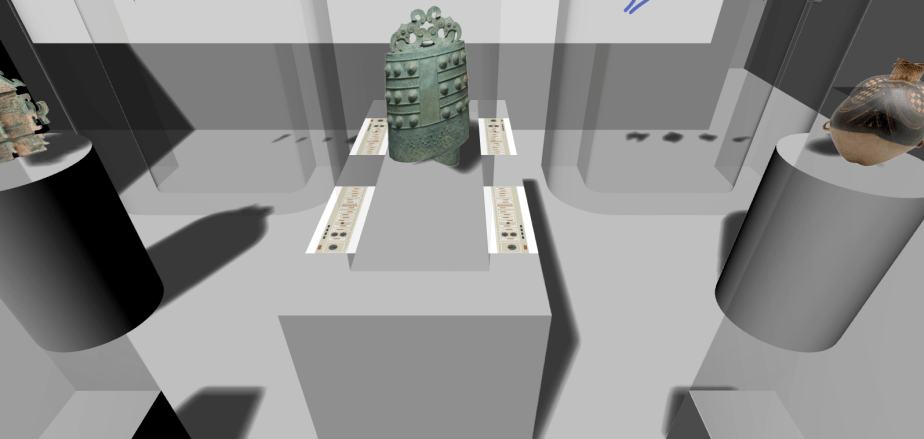
The the ancient music sound station and the story-telling booth would provide the visitors with a multi-sensory experience about Chinese ancient art–art not just living in visual sense, but also in literature, music, and modern recreation. The ancient sound station is paired with one of the artwork, the ancient bronze bell, which was used as important art instrument back in Shang dynasty. By pressing the buttons on the station, visitors could listen to the sound of the bells in different tones or keys, and even could create their own music piece using this ancient instrument through the sound station. The Story-telling booth, on the other hand, is about culture storytelling, in an oral way just like how these stories passing on from generation to generation in China. Occupying the sticking-out space of the gallery, the story-telling booth will have nice daylight, allowing kids and their families sitting on the floor to hear the ancient legends, myths, and historical stories regarding the specific time period of the collection in this gallery. Besides having educators or curators to tell the story, people in the community who are interested could also be invited to help tell or read a story with a story book, thus the local community could be have better involvement in the museum. When no story-teller is in presence, the booth could screen Chinese animation about ancient myths of taotie or other relevant characters, or documentaries about some of the objects on view.
When people are moving out of the gallery, a reflection wall would encourage them to post their interpretation and questions about the art objects or the gallery or even the museum–a great opportunity for their collaborative, reflective, and creative learning. This could also give the agency back to the visitors about art in art museums.
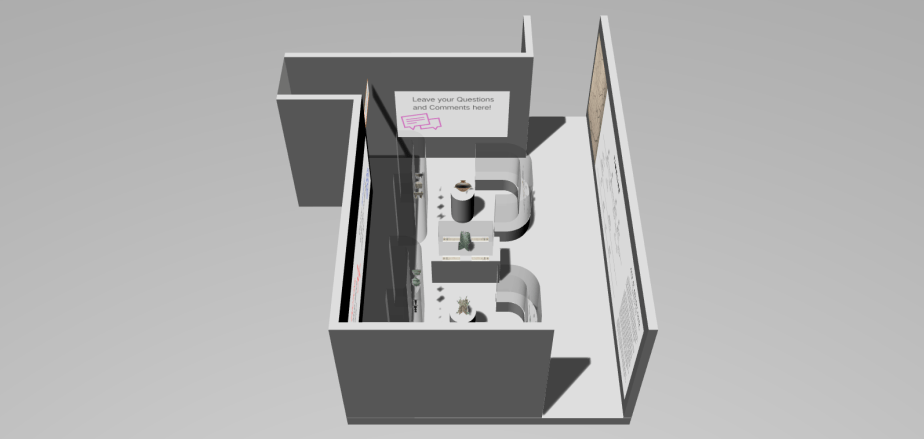
Finally, the objects are arranged in glass boxes with fewer amount and both sides visible to the visitors to provide them with a better, deeper, and more focused art experience. The objects are also organized into groups according to their material, time, and pattern, especially the depiction of faces. By using all these design elements, I hope people could have an impressive and fun experience about Chinese ancient arts, through which hopefully they would re-discover the relevance and diversity of Chinese ancient arts, and build a life-long relationship with art and art museums.
 SIYAO LYU